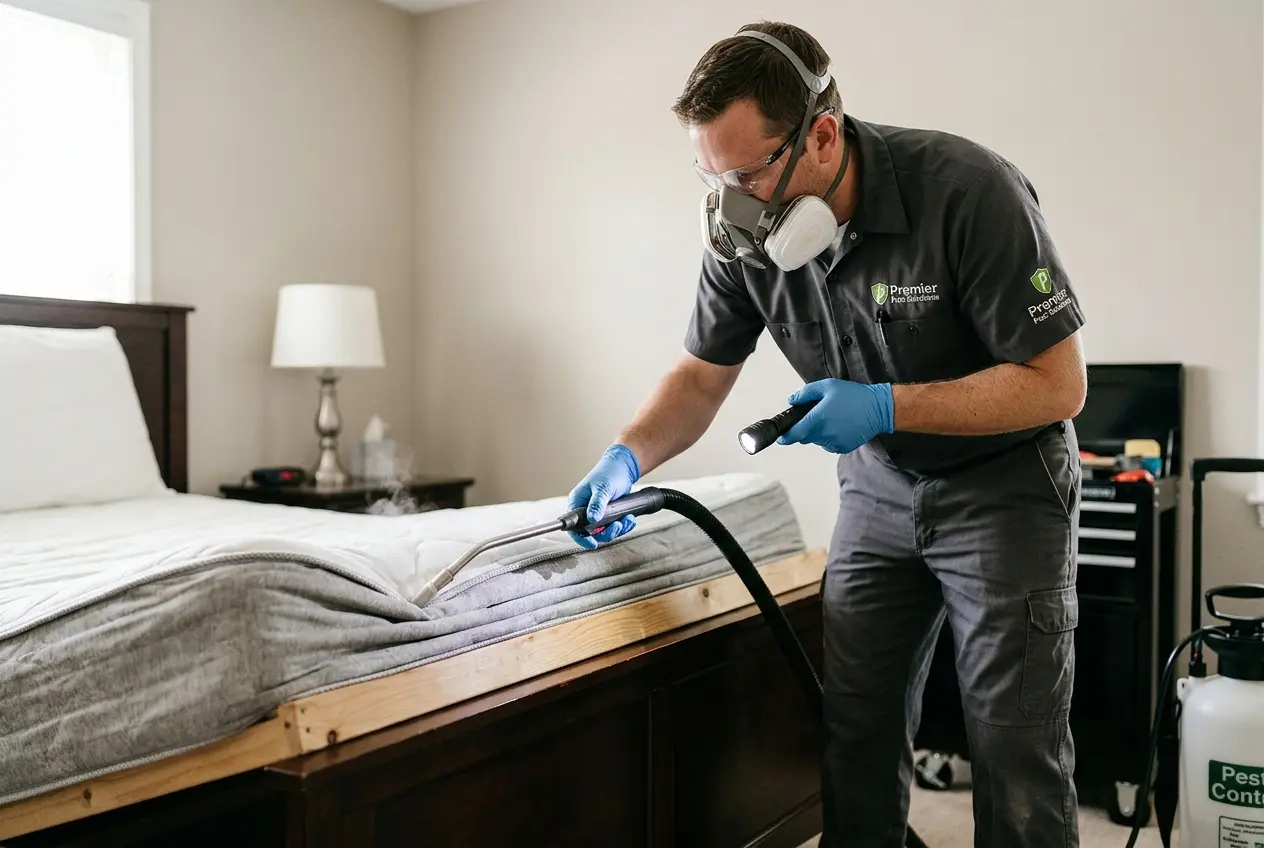
Bed bugs don't discriminate - they affect everything from downtown Tampa condos to historic Seminole Heights bungalows. Our comprehensive treatment starts with a meticulous inspection using trained dogs and flashlights to locate every hiding spot, including behind baseboards, in electrical outlets, and along mattress seams.
We use a combination of heat treatment and targeted insecticides for complete elimination. Heat is particularly effective in Florida homes as it penetrates items that can't be treated with chemicals, like electronics and delicate fabrics. For multi-unit buildings common in areas like Channelside or Hyde Park, we coordinate with property managers to prevent spread between units.
Our follow-up visits ensure complete eradication, and we'll provide detailed preparation instructions to make the treatment as effective as possible. We understand how stressful bed bugs can be, so we handle every case with discretion and compassion.
We use a combination of heat treatment and targeted insecticides for complete elimination. Heat is particularly effective in Florida homes as it penetrates items that can't be treated with chemicals, like electronics and delicate fabrics. For multi-unit buildings common in areas like Channelside or Hyde Park, we coordinate with property managers to prevent spread between units.
Our follow-up visits ensure complete eradication, and we'll provide detailed preparation instructions to make the treatment as effective as possible. We understand how stressful bed bugs can be, so we handle every case with discretion and compassion.
Our Process
- 01 Step 1: Detailed inspection with canine detection when needed
- 02 Step 2: Custom treatment plan combining heat and targeted applications
- 03 Step 3: Professional treatment with attention to all potential hiding spots
- 04 Step 4: Follow-up inspections to confirm elimination
Benefits
- Eliminates all life stages of bed bugs
- Minimal disruption to your daily life
- Discreet, professional service
- Prevention advice for future protection
Frequently Asked Questions
How do I know if I have bed bugs?
Look for small blood spots on sheets, itchy bite marks in lines or clusters, and tiny bugs in mattress seams. We offer free inspections if you're unsure.
Will I need to leave my home during treatment?
For heat treatments, yes - typically for 4-6 hours. For chemical treatments, you may need to be out for a few hours while products dry.
Can bed bugs survive Florida's heat?
While they thrive indoors year-round, our professional heat treatments reach temperatures they can't survive.